



Making your website user-friendly means designing it so visitors can navigate easily, find information quickly, and interact without frustration. A user-friendly website improves engagement, encourages visitors to stay longer, and increases the chances of conversions such as inquiries, sign-ups, or purchases. Simple, thoughtful design and intuitive functionality are key to creating a positive online experience for your audience.
Why User-Friendly Design Matters
A user-friendly website impacts both your business and your audience. When visitors can easily access information and complete tasks, they are more likely to trust your brand and take desired actions. Poor usability, on the other hand, can drive potential customers away, increase bounce rates, and reduce sales or leads.
Key terms to know:
- User Experience (UX): The overall experience visitors have while interacting with your website. This includes ease of navigation, clarity of information, and overall satisfaction.
- User Interface (UI): The visual and interactive elements of a website, such as buttons, menus, and forms. UI design ensures the site is intuitive and visually appealing.
- Responsive Design: A design approach that ensures your website functions well on all devices, including desktops, tablets, and smartphones.
Essential Elements of a User-Friendly Website
Usability plays a direct role in how visitors perceive your brand and interact with your website. When a site is easy to use, users are more likely to stay, explore, and convert. To improve usability, focus on these critical elements:
- Clear Navigation: Use logical menus, categories, and links so visitors can find information quickly.
- Fast Loading Speeds: Optimize images, code, and hosting to reduce page load time. Slow sites frustrate users and hurt search rankings.
- Mobile-Friendly Design: Ensure your website adapts to screens of all sizes. Mobile traffic is a significant portion of overall website visits.
- Readable Content: Use clear headings, bullet points, short paragraphs, and fonts that are easy to read.
- Accessible Design: Include features like alt text for images, captions for videos, and easy keyboard navigation to support all users.
- Consistent Branding: Keep colors, logos, and typography uniform across pages to reinforce your brand identity.
- Effective Calls-to-Action (CTAs): Buttons and links should clearly guide users to take the next step, such as contacting your business or making a purchase.
Examples of Improving User-Friendliness
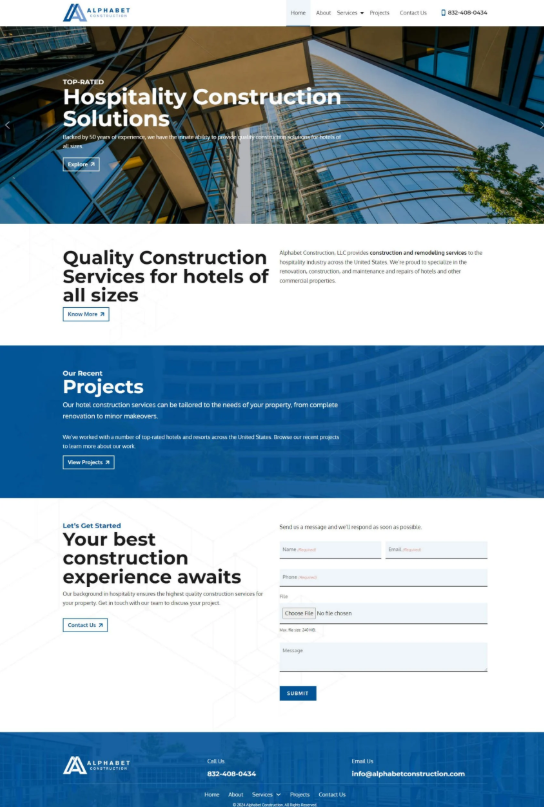
Example of a user-friendly construction website designed by ITVibes, featuring clear navigation, structured content sections, and prominent calls-to-action.
Effective web design combines clarity, usability, and visual impact to support real business goals. Construction websites with clear navigation, well-structured layouts, and strong imagery help visitors quickly understand services and explore past projects. This clarity builds credibility and encourages users to take action, such as requesting a quote or contacting the business.
High-performing websites also focus on conversions by guiding visitors through organized service pages and intuitive user flows. Clear calls-to-action, fast-loading sections, and simple layouts reduce friction and keep users engaged. When visitors can easily find information and understand the next step, websites are more likely to generate qualified leads.
Trust-building elements play a critical role in user-friendly design. Showcasing real projects, professional branding, and informative content positions a business as experienced and reliable. Combined with visible contact options and mobile-friendly design, these elements transform a website into a powerful tool for attracting and converting customers.
Steps to Enhance Website Usability
Improving your website’s usability doesn’t have to be complicated. By taking strategic steps, you can make it easier for visitors to navigate, find information, and take action. The following steps provide a clear roadmap for creating a user-friendly website that supports your business goals.
| Step | What to Do | Why It Matters |
| Conduct a UX Audit | Review site navigation, load times, and mobile performance | Identify usability issues and opportunities for improvement |
| Simplify Navigation | Reduce menu items and organize content logically | Makes it easier for users to find information |
| Optimize Page Speed | Compress images, clean code, and use caching | Faster pages increase engagement and improve SEO |
| Improve Readability | Use clear headings, bullet points, and readable fonts | Helps users absorb information quickly |
| Test Across Devices | Check performance on desktops, tablets, and phones | Ensures a consistent experience for all visitors |
| Gather Feedback | Use surveys or analytics to understand user behavior | Allows ongoing improvements based on real visitor insights |
Tips for Improving Website Usability
- Limit primary navigation to essential pages to reduce confusion.
- Use consistent layouts, colors, and button styles across the site.
- Place calls-to-action where users naturally pause or finish reading.
- Keep forms short and simple to encourage completion.
- Ensure important information is easy to scan, not buried in long text blocks.
Tips for Businesses
- Focus on your audience’s needs and goals rather than design aesthetics alone.
- Review analytics regularly to identify usability gaps and drop-off points.
- Treat usability as an ongoing process, not a one-time improvement.
- Partner with a professional web design team to ensure usability is built into every stage of your website.
Improving your website’s user-friendliness helps visitors find what they need, builds trust, and increases conversions. A well-designed, user-friendly website can become one of your most effective business tools.
Contact us to learn how ITVibes helps businesses create user-friendly websites that drive engagement and support growth.